


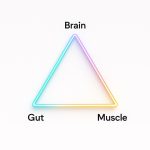

The Brain-Muscle Connection: Why Neural Efficiency Is the Hidden Key to Strength After 40
Have you ever looked at someone in the gym, similar in size to you, lifting way more weight—and wondered, how?!
You’re not alone. And no, it’s not just about muscle size or raw power.
There’s a hidden force at play: neural efficiency—your brain’s ability to activate and coordinate your muscles.
🧠 Strength Starts in the Brain
Most of us think of strength training as just a physical activity—adding muscle, lifting heavier. But studies on elite athletes reveal that the nervous system is often the real driver of performance.
In fact, a 2021 study published in The Journal of Physiology found that experienced powerlifters gained much of their edge through better brain-to-muscle communication, not bigger muscles.
Two people with the same muscle mass can have completely different strength levels based on how efficiently their nervous system fires.
⚡ What Is Neural Efficiency?
Neural efficiency refers to how well your brain and spinal cord:
- Recruit muscle fibers
- Synchronize motor units
- Activate the right muscles at the right time
The better your brain is at this, the more powerfully and efficiently you move—especially as you age.
This concept isn’t new—as early as 1988, researchers highlighted neural factors as key drivers of strength increases, even before muscle hypertrophy occurred.
🧘♀️ Why This Matters More After 40
As we get older, we naturally lose muscle mass (a process called sarcopenia). But here’s the good news: we can preserve strength and function by improving neural efficiency.
That means you can:
- ✅ React faster
- ✅ Maintain balance and coordination
- ✅ Prevent falls and injury
- ✅ Continue building strength—even with smaller muscle gains
💪 How to Train Your Nervous System Like a Pro
You don’t need to be an elite athlete to train smarter. Here’s how to fire up your brain-muscle connection:
1. Power Moves
Think explosive movements like kettlebell swings, medicine ball throws, or jump squats. These help your nervous system learn to fire quickly and efficiently.
2. Focused Control
Slow, controlled resistance training (think tempo squats or slow push-ups) boosts motor unit recruitment and fine-tunes control.
3. Balance + Coordination Work
Exercises that challenge your balance (like single-leg deadlifts or standing on one leg brushing your teeth) improve proprioception and brain-body communication.
🔄 The Takeaway: Train Smart, Not Just Hard
You don’t need to outlift your younger self to stay strong.
But you do need to outsmart aging—and that starts with how you train your nervous system.
👉 Build strength that’s more than muscle deep.
👉 Build strength that lasts.
Don’t just blink. Thrive.
💌 Want more strength, brain, and longevity tips?
Join The Blink Breakthrough. Your quick-hit weekly shift to snap out of autopilot and into action for expert tips and insights delivered directly to your inbox.