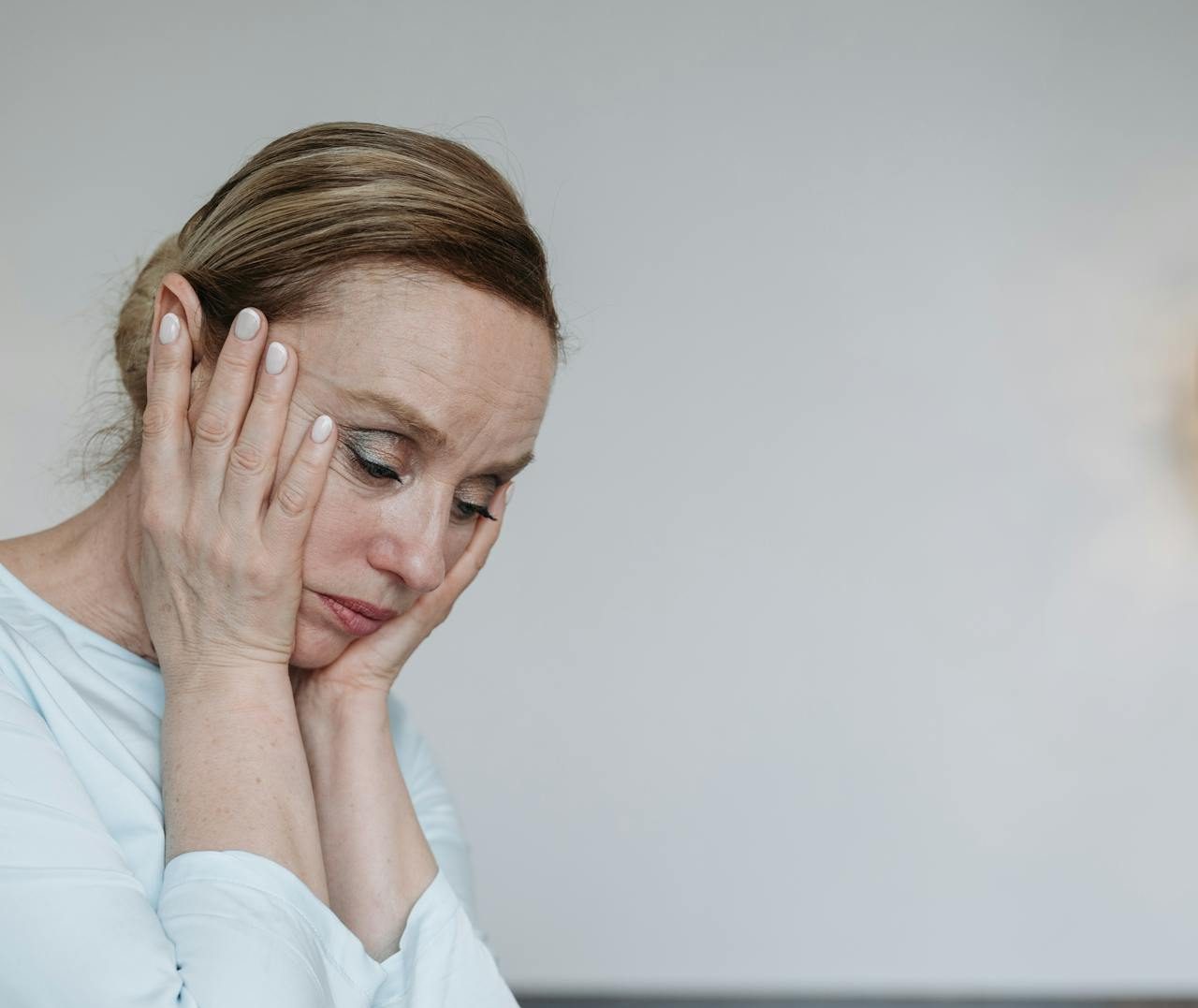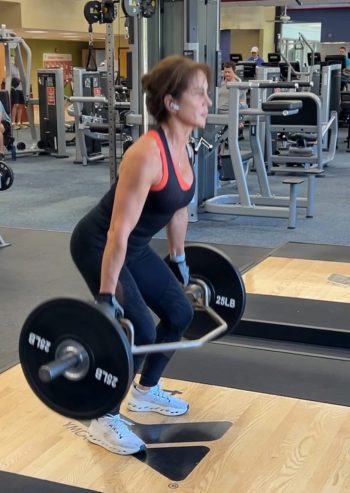




You walked. You rode the bike. You followed Jane Fonda through every leg warmer and leotard and disco beat.
After 50, cardio alone stops being enough. Research confirmed this years ago. Most of us just were not told.
Do you remember the leg warmers? The headband, the leotard, maybe the big 80s hair. Farrah Fawcett haircut and wings?.
Jane Fonda inspired us and we were told to feel the burn, do light weights, and whatever we did, don’t bulk up. The disco music gave us rhythm and kept us going (remember the BeeGees and Staying Alive). We believed her, because that was what everyone believed.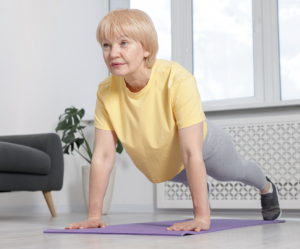
I did… For decades.
Fast forward to this decade, I came across research that changed how I think about every session, every morning routine, and why strong will be important for the years ahead.
Why Resistance Training Keeps Working After You Stop
When you do cardio, your body burns fuel while you move. When you stop, the burn stops with it.
Resistance training works differently. After a strength session, your body keeps burning fuel for up to 48 hours. Not because of anything complicated. Because your body is doing real repair work: rebuilding muscle tissue, restoring energy stores, and fixing the small cellular damage that makes muscles stronger over time.
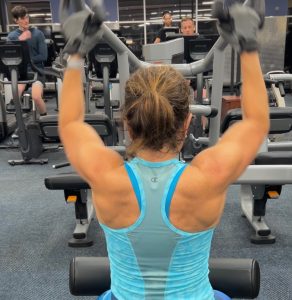
A 2003 review published in Sports Medicine (Borsheim and Bahr) found that resistance training creates a significantly greater and longer-lasting metabolic response than aerobic exercise alone. The repair process your body runs after the session, not the session itself, is what keeps energy use elevated.
Cardio is not bad. It is good for your heart and your mood. But if your goal is a body that works well for the next 20 years, resistance training does something cardio cannot match.
What Nobody Tells You About Muscle After 50
After age 50, your body loses 1 to 2 percent of its muscle mass every year without deliberate effort to stop it. Over a decade, that is up to 20 percent gone. Most people assume this is just what happens.
It is not inevitable. And that distinction matters.
A landmark 1988 study in the Journal of Applied Physiology (Frontera et al.) showed that resistance training in older adults did not just slow muscle loss. It reversed it. Participants produced measurable increases in muscle size and strength. The body responds to the right input at any age.
What Is Sarcopenia?
Sarcopenia is the medical term for age-related muscle loss. It starts in your 30s at a slow pace and accelerates after 50, particularly after menopause when estrogen, which helps preserve muscle, declines. It is not a disease. It is a physiological process that responds directly to resistance training. The research is consistent: use it or lose it is literal here.
And for your bones: two to three resistance sessions per week can increase bone density by 1 to 3 percent per year after  menopause. A review by Layne and Nelson in Medicine and Science in Sports and Exercise (1999) found that progressive resistance training is one of the most effective interventions available for postmenopausal women, outperforming many supplement approaches.
Strong is not about how you look. It is about being able to lift the grandkids, protect your bones if you fall, and keep the next 20 years worth living the way you planned.
Your Calves Are Your Body’s Second Pump
Most people think of their calves as a cosmetic muscle. They are not. They are one of the most important circulatory muscles in your body.
Your heart pumps blood down to your legs. Getting it back up is the job of your calf muscles. When you contract them through walking, standing, or heel raises, they squeeze the veins in your lower legs and push blood back toward your heart and your brain. When your calves are weak, or when you sit for long periods without moving them, blood pools in your lower legs. Less blood returning to your heart means less being sent to your brain. That contributes to afternoon fatigue and mental fog that many women over 50 experience and assume is just part of aging.
It is not just aging. It is circulation. And you can change it.
Research by Laughlin (1987) in the American Journal of Physiology showed that the soleus, the deeper of the two main calf muscles, functions as a peripheral venous pump, actively supporting the return of blood from the lower limbs back to the heart and reducing pooling in the legs.
What Is the Calf Muscle Pump?
The calf muscle pump is the mechanism by which your soleus and gastrocnemius muscles squeeze the veins in your lower legs during movement, pushing blood upward against gravity back toward your heart. It is sometimes called the secondary heart. When these muscles are weak or inactive for long periods, venous blood pools in the legs, reducing the volume returning to the heart and, by extension, the brain. This is why a simple heel raise is not just a strength exercise. It is a circulation exercise.
Resistance Training Feeds Your Brain Too
When your muscles work against resistance, they release chemicals called myokines into your bloodstream. These molecules travel to your brain, reduce inflammation, and trigger production of BDNF.
What Is BDNF?
BDNF stands for Brain-Derived Neurotrophic Factor. Think of it as fertilizer for your brain cells. It supports their growth, survival, and connection to each other, and it is directly linked to memory, learning, focus, and mood. Your brain produces more of it in response to physical exertion. Resistance training and aerobic exercise both trigger BDNF, but through different and complementary pathways, which is why combining both produces stronger results than either alone.
 Research by Cotman and Berchtold published in Trends in Neurosciences (2002) identified exercise as one of the strongest natural stimulants of BDNF production. Pedersen’s work on myokines (2011) showed that muscle tissue acts as an endocrine organ, actively sending chemical signals to the brain during and after resistance work.
Four Exercises to Start Today. No Gym, No Equipment.
Your own body weight is enough to start. The goal is to give your muscles real resistance so they respond, rebuild, and grow stronger. Pick one. Do it today. Build from there.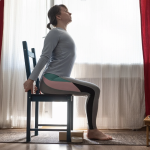
- Sit-to-Stands. Stand up from your chair without using your hands. Sit back down slowly and with control. Repeat 10 times. This single movement measures lower-body strength and predicts functional independence in adults over 50. It works your quadriceps, glutes, and core, the muscles that keep you stable every day.

- Heel Raises. Stand near a counter for balance. Rise up slowly onto your toes, hold one second, lower back down with control. Repeat 15 times. This strengthens your calf pump and directly improves blood return to your heart and brain. Do these while your coffee brews. Two minutes. Consistent effort over time produces real change.
- Wall Push-Ups. Stand an arm’s length from a wall, hands flat at shoulder height. Lower your chest toward the wall and push back. Repeat 10 to 15 times. Upper-body resistance work without getting on the floor. Works your chest, shoulders, and triceps, the muscles that support posture and daily arm function.
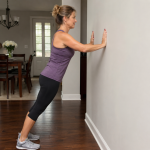 Step further from the wall to increase the challenge when you are ready.
 - Chair Tricep Dips. Sit at the edge of a sturdy chair. Hands on the armrests or seat
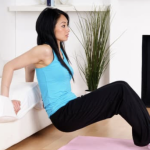 edge. Lower yourself a few inches by bending your elbows, then push back up. Repeat 10 times. Your triceps support every pushing movement you do, from getting up out of a chair to lifting overhead. No equipment required beyond what you already have.
If you want more range and variety: TRX suspension straps hook onto any door and use your own body 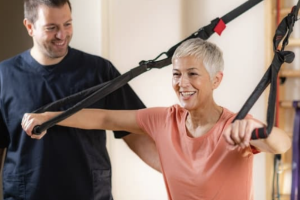 weight as resistance. They are available online for $30 to $80. You control the difficulty by changing your body angle. A slight lean is a manageable start. Slope closer to horizontal and it becomes significantly harder than you would expect. One note: make sure you are on the correct side of the door when you anchor them. That is a lesson worth learning now.
My Perspective
I still use TRX because it meets me where I am on any given day. Some days that is a slight lean. Other days I can slope my body to almost 45 degrees. I started there because the weight rack felt like someone else’s world.
I do heel raises at the kitchen counter. I do sit-to-stands between calls. Not because I have a program. Because I know what these muscles do for me over the next 20 years, and that knowledge made the small habits feel worth doing.
You spent decades building a good life. The question now is whether your body can keep up with it. That only happens if you build for it now, with inputs small enough to fit your day and consistent enough to matter.
No overhaul required.
Frequently Asked Questions
Does resistance training raise your metabolism after 50?
Yes. Resistance training elevates your metabolism for up to 48 hours after you finish, because your body continues repairing and rebuilding muscle tissue during that time. This effect is called excess post-exercise oxygen consumption, and it is significantly greater after resistance work than after aerobic exercise. (Borsheim and Bahr, Sports Medicine, 2003)
Can women over 50 actually build muscle?
Yes. Research shows that resistance training produces measurable increases in muscle size and strength in older adults, not just a slowing of loss, but an actual reversal of it. The body responds to the right stimulus at any age. (Frontera et al., Journal of Applied Physiology, 1988)
Do I need a gym or equipment for resistance training?
No. Your own body weight provides real resistance. Sit-to-stands, heel raises, wall push-ups, and chair dips all qualify. TRX suspension straps add more variety for under $80 and work with any door at home or while traveling.
Why do heel raises help with fatigue and brain fog?
Your calf muscles act as a secondary circulatory pump, pushing blood from your lower legs back up to your heart and brain. When they are weak or inactive, blood pools in the legs and less reaches the brain. Heel raises directly strengthen this pump mechanism and improve circulation throughout the day.
How often should I do resistance exercises to see results?
Research suggests 2 to 3 sessions per week produces measurable improvements in muscle mass and bone density. Starting with one or two movements and building consistent habits produces better long-term results than an intense start you cannot sustain.
Want evidence-based tools built for your body and brain after 50?
Ready for the next step? Get early access to Calm Energy, our first signature formula.
Sources: Borsheim E, Bahr R. Effect of exercise intensity, duration and mode on post-exercise oxygen consumption. Sports Medicine. 2003;33(14):1037-1060. pubmed.ncbi.nlm.nih.gov/14599232 | Frontera WR et al. Strength conditioning in older men: skeletal muscle hypertrophy and improved function. Journal of Applied Physiology. 1988;64(3):1038-1044. pubmed.ncbi.nlm.nih.gov/3366258 | Layne JE, Nelson ME. The effects of progressive resistance training on bone density: a review. Medicine and Science in Sports and Exercise. 1999;31(1):25-30. pubmed.ncbi.nlm.nih.gov/10086397 | Laughlin MH. Skeletal muscle blood flow capacity: role of muscle pump in exercise hyperemia. American Journal of Physiology. 1987;253(5):H993-H1004. pubmed.ncbi.nlm.nih.gov/3310594 | Cotman CW, Berchtold NC. Exercise: a behavioral intervention to enhance brain health and plasticity. Trends in Neurosciences. 2002;25(6):295-301. pubmed.ncbi.nlm.nih.gov/12086747 | Pedersen BK. Muscles and their myokines. Journal of Experimental Biology. 2011;214(2):337-346. pubmed.ncbi.nlm.nih.gov/21177944 | Note: Verify all PubMed links before publishing.